In kitchen design, the color pairing of countertops and cabinets defines the overall aesthetic of the space. To create a visually comfortable atmosphere, homeowners often wonder whether countertops should be lighter or darker than cabinetry. In truth, there is no rigid rule dictating that countertops must be lighter or darker than base cabinets; the ideal color scheme depends on kitchen dimensions, ergonomics, and visual design requirements.
From a practical standpoint, a countertop slightly darker than base cabinets delivers optimal functionality. That said, two mainstream aesthetic choices remain popular among most homeowners: matching countertop and cabinet tones, or opting for a lighter countertop. Below is a detailed breakdown of the respective benefits of lighter and darker countertops relative to cabinets, to help you achieve a balance of beauty and practicality.
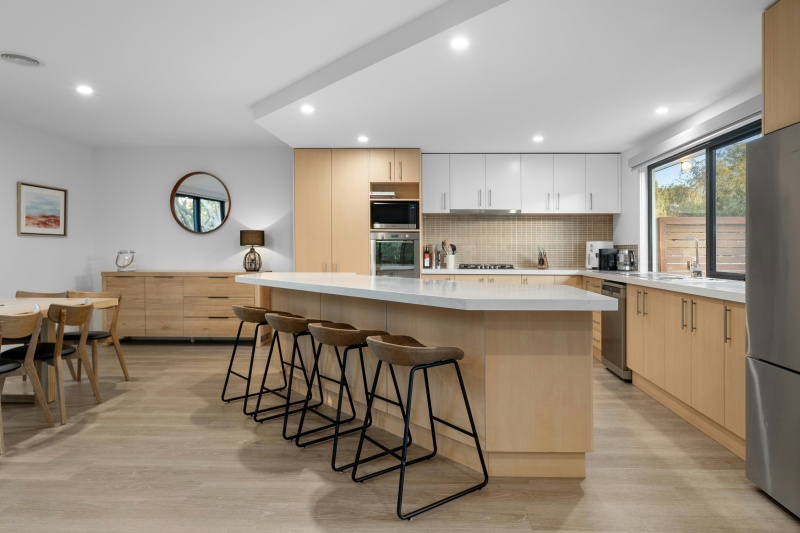
Core Principle: Color Psychology & Spatial Perception
Before diving into specific pairing ideas, grasping the fundamentals of color psychology and spatial perception is essential—these principles underpin all successful interior design decisions. Light hues (white, cream, beige) are reflective, bouncing natural and artificial light throughout the room to create a more spacious, airy, and open feel. Dark shades (black, coffee, charcoal gray, navy blue) absorb light, crafting a deep, sophisticated ambiance. However, overusing dark tones risks making compact kitchens feel cramped and oppressive.
In kitchens or bathrooms, cabinets occupy 40% to 60% of the visible visual space, while countertops account for just 10% to 20%. This means cabinets set the primary color palette of the room, with countertops serving as a complementary or contrasting accent. The key lies in balancing dominant and accent colors to avoid a space that feels either monotonous or cluttered.
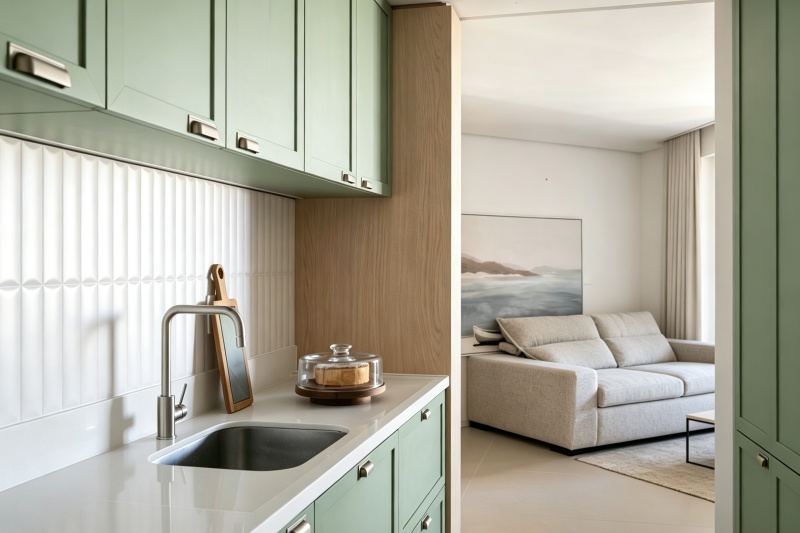
Option 1: Lighter Countertops Over Dark Cabinets
Dark cabinets paired with light countertops stand as one of the most timeless, beloved interior design combinations—and for good reason. This pairing creates visual interest through color contrast while resolving common spatial layout challenges. Below are its core advantages and key design considerations.
Advantages of Dark Cabinets + Light Countertops
1. Visual Appeal: Distinct Layers & Elevated Sophistication
- Sharp color contrast: The stark visual divide between dark cabinetry and light countertops eliminates flat, one-note styling, adding rich depth and dimensionality to the kitchen with striking design character.
- Balanced visual weight: Dark cabinets exude a grounded, grand presence, while light countertops bring freshness and brightness. Together, they strike a perfect visual equilibrium—retaining the sturdiness of dark tones while offsetting their potential heaviness for a cohesive, upscale space.
2. Space Enhancement: Visually Expansive & Bright
- Light countertops amplify brightness: Highly reflective light countertops bounce light around the room, creating an optical illusion of extra square footage. This makes them ideal for dimly lit or small kitchens, boosting airiness and luminosity.
- Dark cabinets anchor the room: As the visual anchor of the kitchen, dark cabinetry grounds the space, eliminating the "floating" effect that all-light interiors can have and lending solid texture to the overall layout.
3. Practical Stain Resistance: Low-Maintenance Complementary Tones
- Dark cabinets hide blemishes: Dark cabinet surfaces effectively conceal daily water stains, oil splatters, and fingerprints, retaining a tidy appearance with minimal upkeep over time.
- Light countertops highlight cleanliness: Pale countertops make messes instantly visible, encouraging consistent cleaning habits. Materials like light quartz also evoke a subconscious sense of sanitation, elevating the cooking experience.
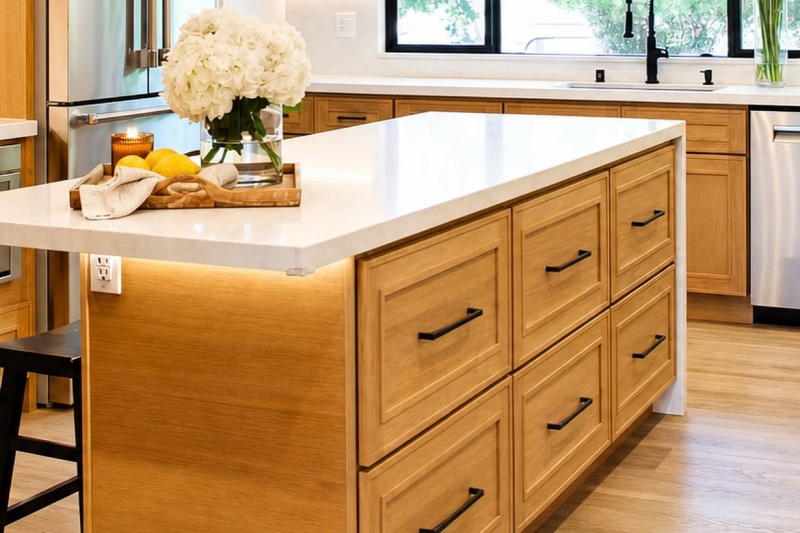
Design Considerations
- Scale of the Kitchen: Though suitable for small spaces, all-dark base cabinets risk claustrophobia. A recommended layout is light wall cabinets + dark base cabinets + light countertops to boost airiness. For oversized kitchens, add visual weight to avoid an unbalanced look: install a dark backsplash or fit the kitchen island with a dark countertop to unify the entire space.
- Smooth Color Transition: Strong contrast between light countertops and dark cabinets requires careful tuning of color brightness to avoid jarring visuals. Soften the contrast with muted mid-tone accents, and coordinate material textures to prevent disjointed styling and preserve overall harmony.
- Undertone Coordination: Dark cabinets carry inherent underlying hues: rich coffee finishes lean warm brown, while charcoal gray carries cool gray undertones. Match your light countertop’s undertone to complement the cabinetry: pair warm-toned dark cabinetry such as walnut framed kitchen cabinets with warm pale surfaces (cream white, beige); match cool dark styles like navy blue kitchen cabinets with cool light countertops (pure white, light gray).
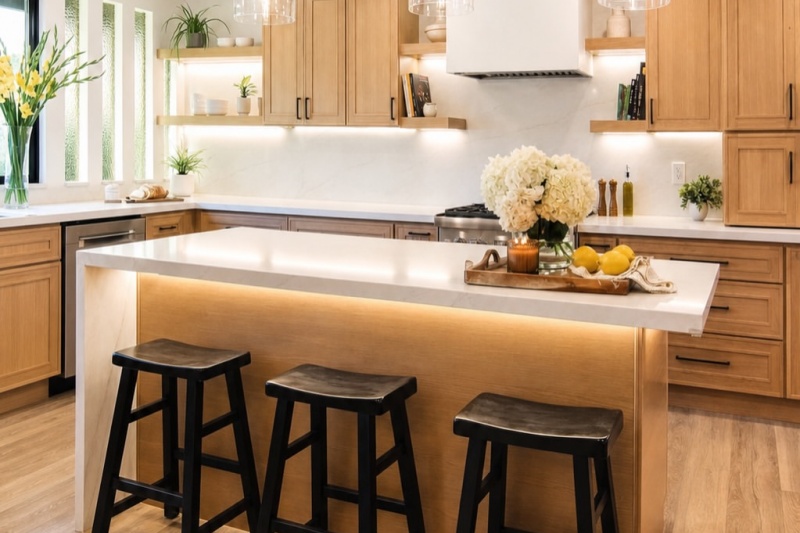
Option 2: Darker Countertops Over Light Cabinets (Light Cabinets + Dark Countertops)
Conversely, light cabinets with dark countertops offer equally stylish, functional design, albeit with distinct aesthetic goals. This pairing amplifies spatial depth, balances visual weight, and lends the kitchen rich texture and contemporary flair.
Advantages of Light Cabinets + Dark Countertops
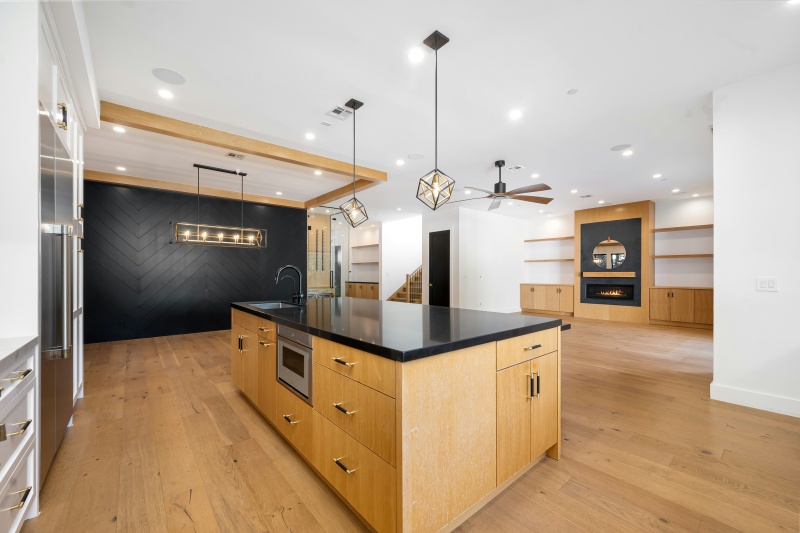
- Conceals Surface Imperfections: Countertops endure heavy daily use, and dark surfaces hide spills, food residue, watermarks, and minor scratches far better than light alternatives. Materials such as black granite and dark quartz feature natural stain-resistant properties. If you cook frequently and wish to cut down on frequent scrubbing without stressing over minor blemishes, combinations like white oak kitchen cabinets with black countertops are an ideal fit.
- Versatile Styling: This pairing adapts seamlessly to countless interior aesthetics, including modern minimalism, light luxury, and industrial design. Light cabinetry blends effortlessly into any kitchen environment, while dark countertops act as a bold focal point that complements all kitchen layouts and overall home decor styles.
- Rich Depth & Dimension: Light cabinetry (white, pale gray) brightens the room, while dark countertops (charcoal, black) act as a heavy visual anchor. Their bold contrast breaks up the flatness of all-light schemes, adding layered depth and dramatically elevating the kitchen’s aesthetic.
Design Considerations
- Balanced Color Contrast: Avoid extreme pairings like pure white cabinets with jet-black countertops; excessive color disparity causes eye strain. Opt for muted dark finishes—charcoal gray, carbon gray, or speckled dark stone—to retain layered depth without creating a top-heavy, disjointed look, and align all room hues for cohesion.
- Material Compatibility: Certain dark natural stones (e.g., black marble) feature more porous surfaces than engineered options like dark quartz, making them prone to staining. If you select dark natural stone countertops, apply regular sealant to block liquid absorption. For low-upkeep solutions, dark quartz is superior: non-porous, stain-proof, and available in a wide range of dark shades and surface finishes.
- Cleaning Requirements: Unlike dark cabinetry, light cabinet doors show smudges and dirt easily. Choose stain-resistant, wipeable door materials such as lacquered panels and maintain regular upkeep. While dark countertops mask minor spills, dust particles stand out under strong light, requiring frequent wiping to stay pristine.
How to Pick the Perfect Countertop and Cabinet Combo for Your Space?
Whether your countertop should be lighter or darker than your cabinetry hinges on several key factors. Read on to find the ideal cabinet-countertop pairing tailored to your needs.
1. Evaluate Room Size & Natural Light
- Small, dimly lit spaces: Opt for lighter countertops against darker cabinets (dark cabinets + light countertops). This maximizes light reflection and creates a visually roomier atmosphere.
- Spacious, well-lit spaces: Go for darker countertops with light cabinets (light cabinets + dark countertops) to add depth and a cozy ambiance.
- Medium-sized rooms with moderate lighting: Both combinations work. Choose based on your design aesthetic and practical needs. For instance, pick dark countertops to mask stains if you cook frequently; select light countertops if you prefer an airy, bright vibe.
2. Factor in Your Design Style
- Traditional / Farmhouse Style: Dark wooden cabinets paired with light countertops are a timeless classic. Complement the look with warm wood trim and brass hardware for an enduring appeal.
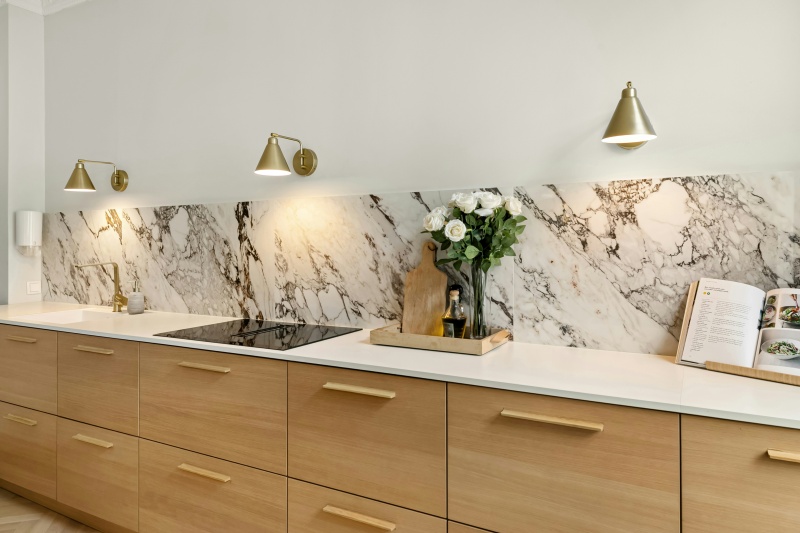
- Modern / Minimalist Style: Light-toned cabinets (white, light grey) matched with dark countertops (black quartz, grey quartz). Matte finishes and streamlined hardware further elevate the minimalist texture.
- Transitional Style: Strike a balance between color contrast and warmth. Examples include light grey cabinets with medium-dark countertops (dark grey quartz), or dark cabinets with warm pale countertops. Incorporate mixed materials like timber and metal to soften the visual contrast.
3. Prioritize Practicality
- High-traffic kitchens: Choose dark countertops with light cabinets to conceal spills and smudges. Quartz is highly recommended for its durability and low upkeep.
- Low-usage spaces (e.g., guest bathrooms): Light countertops paired with dark cabinets are sufficient. They require minimal frequent cleaning and deliver a welcoming bright look.
- Sanitation-focused areas: Light countertops make dust and food debris easily visible, making them perfect for food preparation zones. Simply opt for stain-resistant materials such as quartz to prevent permanent discoloration.
Final Takeaway
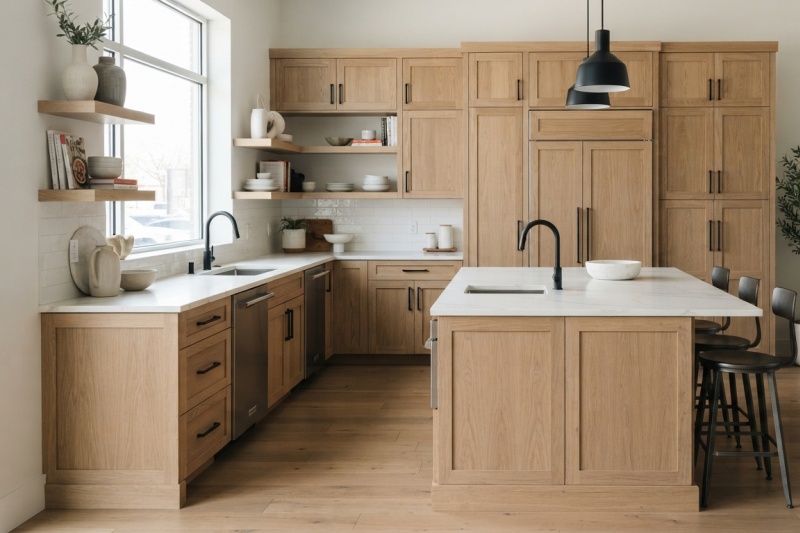
At its core, the choice between lighter or darker countertops boils down to balance: balancing light and shadow, functionality and aesthetics, as well as personal taste. There is no universal rule. By weighing room dimensions, natural lighting, design style and practical demands, you will land on a pairing that marries beauty and functionality.
If you are still undecided, turn to our professional team. As a kitchen cabinet supplier, Union Wood houses an experienced design crew. We can visualize various matching schemes for you and recommend suitable materials based on your space layout and lifestyle. Remember: the best color palette is the one that fills you with joy every time you step into the room.